RecommendedEditors Choice
Turns WordPress into an online store for selling products, managing orders, accepting payments, and extending store features.
YITH WooCommerce Wishlist is most relevant on stores where shoppers compare products, plan gifts, or return to saved items over several sessions. Very small catalogs may gain less from a full wishlist workflow when shoppers can rediscover products easily.
Best fit: WooCommerce stores where shoppers compare products over time, buy gifts, or benefit from saving items before purchase. I would choose a different route for simple stores with a tiny catalog where a wishlist adds little value to the buying journey.
Not every shopper is ready to buy during the first visit. Without a wishlist, products discovered during research can be difficult to find again, especially in larger catalogs.
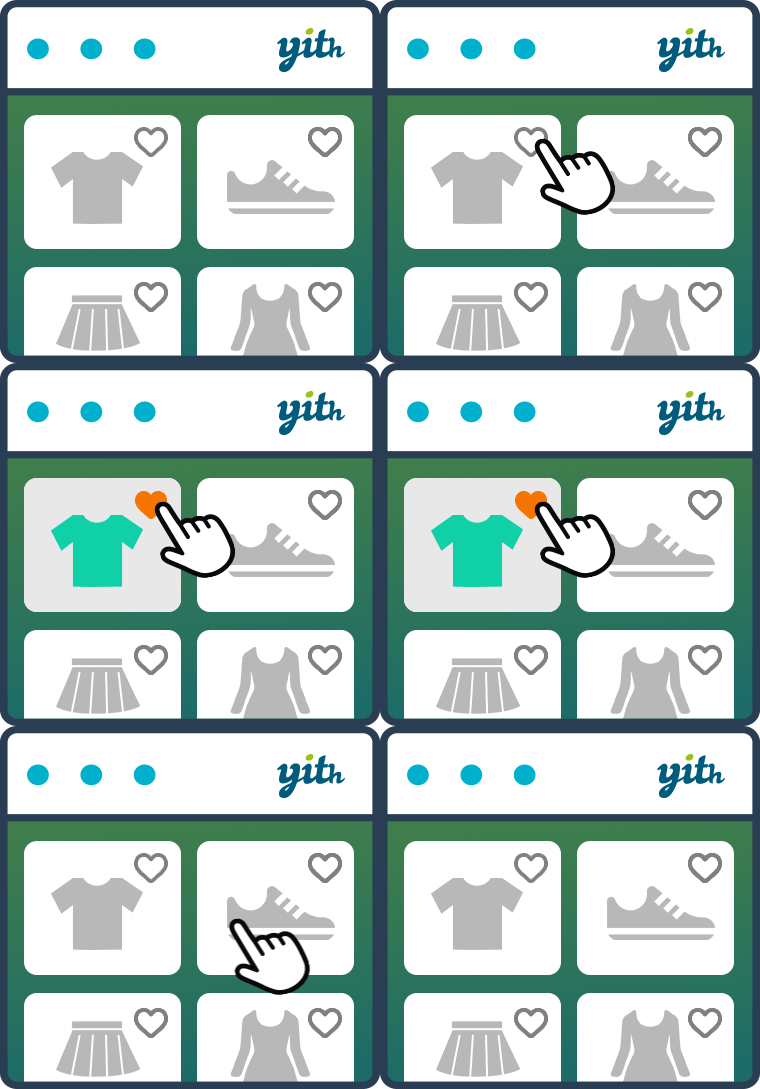
The plugin adds wishlist actions to supported WooCommerce product and shop views, stores selected products and variations, and provides a dedicated wishlist page where shoppers can revisit saved items.
WooCommerce stores where shoppers compare products over time, buy gifts, or benefit from saving items before purchase. The key question is whether this capability is central enough to the site to justify maintaining another plugin.
A wishlist creates another customer state that should be tested with caching, login behavior, multilingual setups, and privacy expectations. It should also be measured to confirm shoppers actually use it.
WooCommerce stores can also use other wishlist extensions or save-for-later features bundled with themes. YITH is most useful when you want a mature dedicated wishlist workflow with a clear upgrade path.
The core plugin is available from WordPress.org. YITH provides a free wishlist plugin and a separate premium edition. Upgrade only when the store needs the paid wishlist controls rather than because the catalog is large.
Test wishlist buttons on product archives, single products, variations, account pages, and the active cache setup so saved-state behavior remains consistent for shoppers. For wishlists, document how guest and account-based saving works on the store so future cache or membership changes do not break the expected shopper state.
For logged-out visitors, confirm whether wishlist persistence matches the store experience you want, especially when caching or consent tools are active.
On stores with full-page caching, test both guest and logged-in wishlist behavior because saved-state features can expose cache or session issues that do not appear during an administrator-only check.
That check is especially important for variable products, because the saved variation and the displayed parent product should remain clear when the shopper returns.
For larger YITH Wishlist catalogs, saved products become especially useful when customers research across several visits or maintain gift-oriented lists. On a compact catalog, the extra wishlist layer can be unnecessary when every item is already easy to rediscover.
YITH Premium can turn wishlist activity into promotional campaigns, sale alerts and back-in-stock messages. Those tools should be connected to the store’s consent policy rather than treated as automatic permission to send marketing email. Separate transactional account notifications from promotional campaigns and confirm unsubscribe behavior before enabling automated wishlist messages.
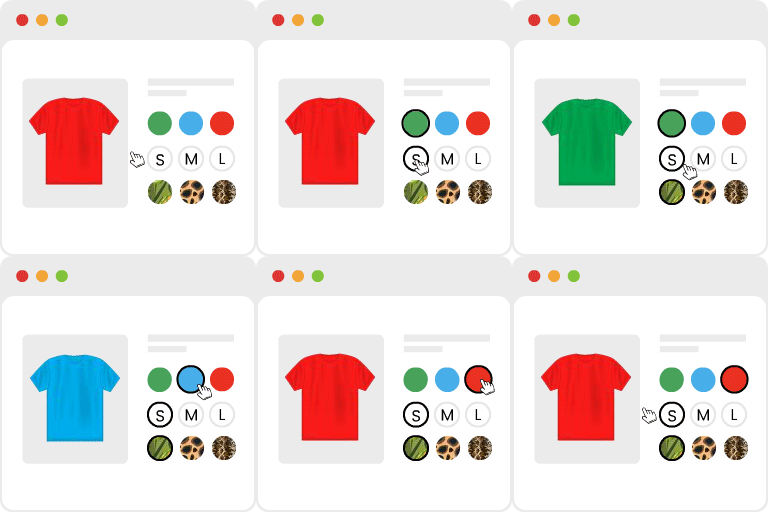
For variable products, test that the selected size, color or other variation is saved with the item. A wishlist that reopens the generic parent product instead of the shopper’s chosen variation adds friction at the exact point the customer returns to buy.
The plugin adds wishlist actions to supported WooCommerce product and shop views, stores selected products and variations, and provides a dedicated wishlist page where shoppers can revisit saved items.
WooCommerce stores where shoppers compare products over time, buy gifts, or benefit from saving items before purchase.
The WordPress.org plugin is available free. Check the official publisher site for any current premium product, service, or upgrade costs.
A wishlist creates another customer state that should be tested with caching, login behavior, multilingual setups, and privacy expectations. It should also be measured to confirm shoppers actually use it.
WooCommerce stores can also use other wishlist extensions or save-for-later features bundled with themes. YITH is most useful when you want a mature dedicated wishlist workflow with a clear upgrade path.
Yes. Its current workflow supports saving WooCommerce products and variations, which should be tested with the store’s actual product setup.
Turns WordPress into an online store for selling products, managing orders, accepting payments, and extending store features.
Variation Swatches for WooCommerce replaces basic variation dropdowns with visual color, image, label, and button swatches for variable products.
Adds WordPress eCommerce tools for selling physical products, digital downloads, subscriptions, donations, and taking payments.
Log in or create an account to continue.