



Choosing among the best WordPress chart plugins is less about finding the longest feature list and more about matching the plugin to the job your site actually needs to do. I compared 6 established options for setup, core workflow, extensibility, pricing model, and the compromises that matter after launch.
TL;DR: Best WordPress Chart & Graph Plugins in 2026
If you want the safest shortlist, start with Visualizer. Best overall for common charts. wpDataTables is a better fit when for data-heavy sites. Compare the workflow first, then confirm current pricing and integrations before buying.
Quick Comparison
| Plugin | Best for | Pricing model |
|---|---|---|
| Visualizer | Best overall for common charts | Free core; Pro available |
| wpDataTables | Best for data-heavy sites | Lite and premium editions |
| Ninja Charts | Best free option for Ninja Tables users | Free |
| Chartify | Best for quick chart creation | Free core; Pro available |
| Graphina | Best for Elementor chart layouts | Free core; Pro available |
| M Chart | Best for WordPress-native chart editing | Free |
How I Chose These WordPress chart plugins
For this Chart & Graph Plugins roundup, I prioritized plugins that solve the core workflow directly, are actively maintained or commercially supported, and have a clear reason to exist in a WordPress stack. I also checked what the free or base product actually covers, where paid upgrades become necessary, and whether each tool stays focused on Chart & Graph Plugins or expands into a broader platform.
For Chart & Graph Plugins, a longer feature list did not automatically earn a higher position. I favored products whose scope matches the job cleanly, because a focused tool can reduce setup time, avoid overlapping systems, and make future maintenance easier.
1. Visualizer — Best overall for common charts
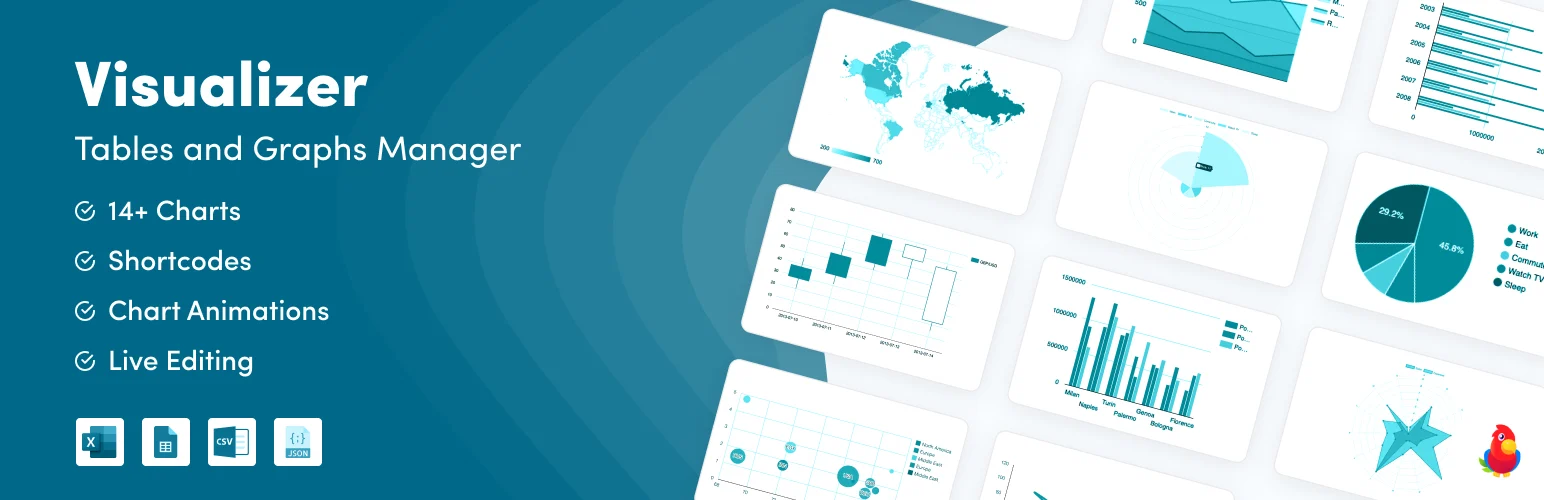
Best for: overall for common charts.
Visualizer earns a place in this comparison because its core workflow matches what people searching for WordPress chart plugins usually need. The important question is not whether it can do everything, but whether its approach fits your site, team, data, and the other WordPress tools you already use.
Key features
- Multiple chart types
- Data import
- Responsive charts
- Gutenberg support
- Table/chart management
Pros
- Focused on a real, established WordPress workflow.
- multiple chart types.
- Can fit a clear type of site without forcing every user into the same setup.
Cons
- Before deploying a Chart & Graph Plugins plugin, test it with your theme, hosting stack, permissions, and any integrations that touch the same workflow.
- Some advanced capabilities may require a paid edition, add-on, or external service.
Pricing: the WordPress Chart & Graph Plugins product has a free core and a Pro edition. Confirm the current plan contents and renewal price on the developer’s pricing page before purchase.
2. wpDataTables — Best for data-heavy sites
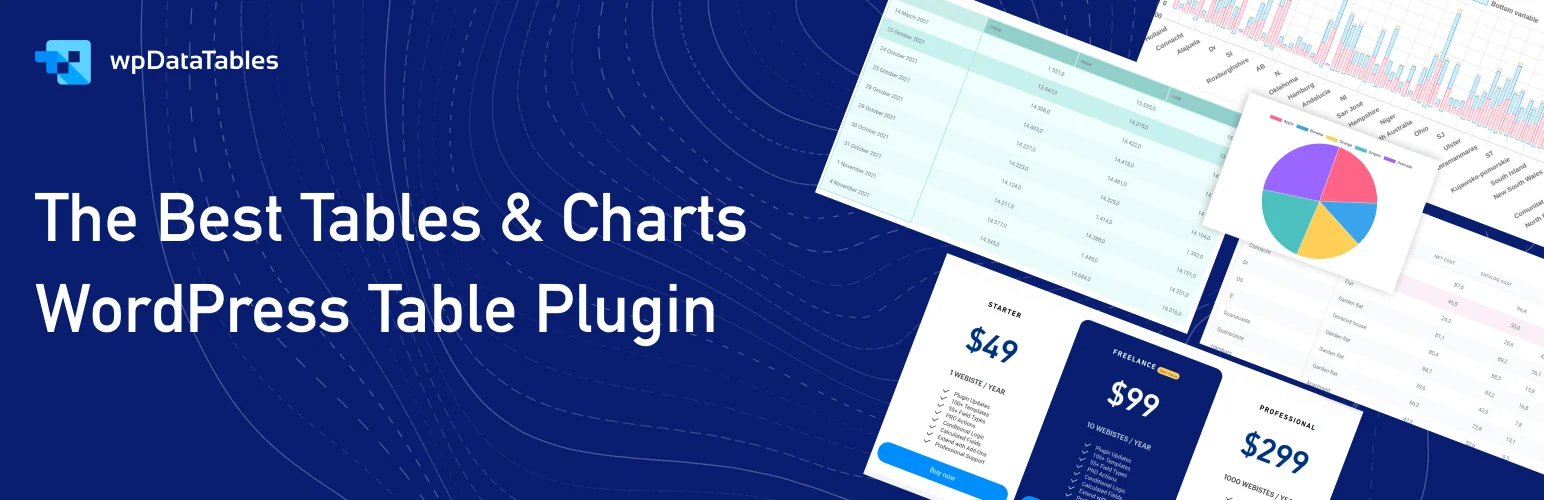
Best for: for data-heavy sites.
wpDataTables earns a place in this comparison because its core workflow matches what people searching for WordPress chart plugins usually need. The important question is not whether it can do everything, but whether its approach fits your site, team, data, and the other WordPress tools you already use.
Key features
- Charts from tables
- Large datasets
- Responsive tables
- Filters
- Database and spreadsheet integrations depending edition
Pros
- Focused on a real, established WordPress workflow.
- charts from tables.
- Can fit a clear type of site without forcing every user into the same setup.
Cons
- Before deploying a Chart & Graph Plugins plugin, test it with your theme, hosting stack, permissions, and any integrations that touch the same workflow.
- Some advanced capabilities may require a paid edition, add-on, or external service.
Pricing: Lite and premium editions. Pricing and plan contents can change, so check the developer’s current pricing page before purchase.
3. Ninja Charts — Best free option for Ninja Tables users

Best for: free option for Ninja Tables users.
Ninja Charts earns a place in this comparison because its core workflow matches what people searching for WordPress chart plugins usually need. The important question is not whether it can do everything, but whether its approach fits your site, team, data, and the other WordPress tools you already use.
Key features
- 12+ chart types
- Gutenberg block
- Ninja Tables integration
- Fluent Forms integration
- Responsive charts
Pros
- Focused on a real, established WordPress workflow.
- 12+ chart types.
- Can fit a clear type of site without forcing every user into the same setup.
Cons
- Before deploying a Chart & Graph Plugins plugin, test it with your theme, hosting stack, permissions, and any integrations that touch the same workflow.
- Some advanced capabilities may require a paid edition, add-on, or external service.
Pricing: this WordPress Chart & Graph Plugins option is currently free. Confirm its present maintenance status and any optional services on the developer’s product page before production use.
4. Chartify — Best for quick chart creation
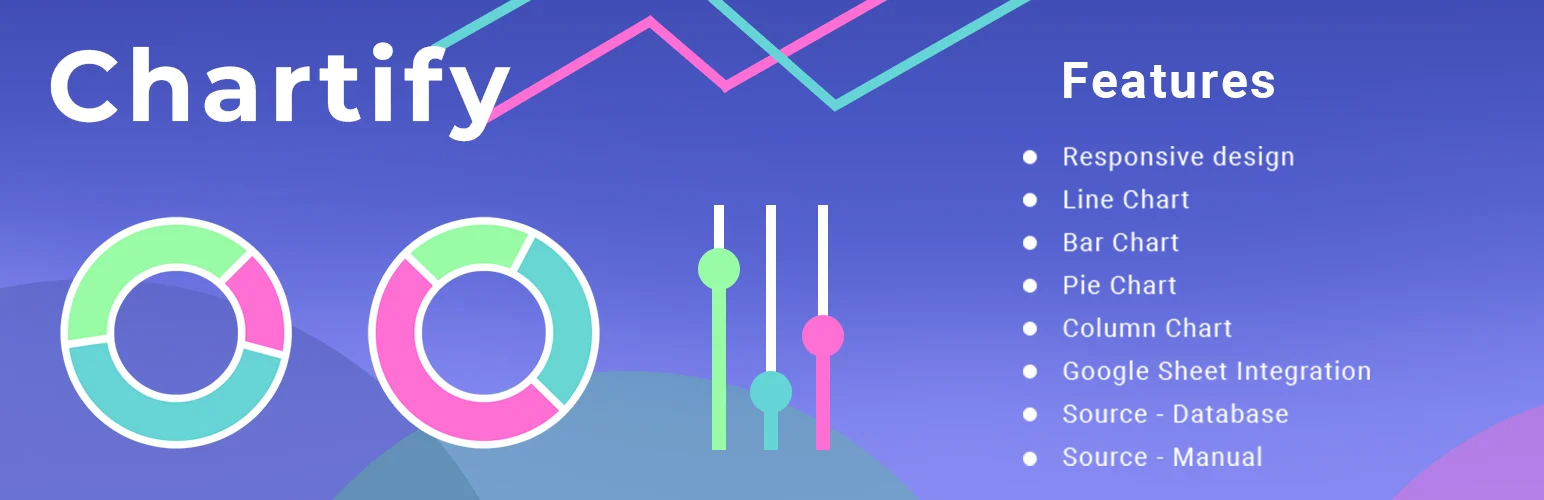
Best for: for quick chart creation.
Chartify earns a place in this comparison because its core workflow matches what people searching for WordPress chart plugins usually need. The important question is not whether it can do everything, but whether its approach fits your site, team, data, and the other WordPress tools you already use.
Key features
- Multiple chart types
- Chart customization
- Shortcodes
- Responsive output
- Data entry/import options
Pros
- Focused on a real, established WordPress workflow.
- multiple chart types.
- Can fit a clear type of site without forcing every user into the same setup.
Cons
- Before deploying a Chart & Graph Plugins plugin, test it with your theme, hosting stack, permissions, and any integrations that touch the same workflow.
- Some advanced capabilities may require a paid edition, add-on, or external service.
Pricing: the WordPress Chart & Graph Plugins product has a free core and a Pro edition. Confirm the current plan contents and renewal price on the developer’s pricing page before purchase.
5. Graphina — Best for Elementor chart layouts

Best for: for Elementor chart layouts.
Graphina earns a place in this comparison because its core workflow matches what people searching for WordPress chart plugins usually need. The important question is not whether it can do everything, but whether its approach fits your site, team, data, and the other WordPress tools you already use.
Key features
- Elementor widgets
- Many chart types
- Dynamic data options
- Responsive controls
- Visual styling
Pros
- Focused on a real, established WordPress workflow.
- Elementor widgets.
- Can fit a clear type of site without forcing every user into the same setup.
Cons
- Before deploying a Chart & Graph Plugins plugin, test it with your theme, hosting stack, permissions, and any integrations that touch the same workflow.
- Some advanced capabilities may require a paid edition, add-on, or external service.
Pricing: the WordPress Chart & Graph Plugins product has a free core and a Pro edition. Confirm the current plan contents and renewal price on the developer’s pricing page before purchase.
6. M Chart — Best for WordPress-native chart editing

Best for: for WordPress-native chart editing.
M Chart earns a place in this comparison because its core workflow matches what people searching for WordPress chart plugins usually need. The important question is not whether it can do everything, but whether its approach fits your site, team, data, and the other WordPress tools you already use.
Key features
- Spreadsheet-like data entry
- Chart.js charts
- Shortcodes
- CSV workflows
- Developer filters
Pros
- Focused on a real, established WordPress workflow.
- spreadsheet-like data entry.
- Can fit a clear type of site without forcing every user into the same setup.
Cons
- Before deploying a Chart & Graph Plugins plugin, test it with your theme, hosting stack, permissions, and any integrations that touch the same workflow.
- Some advanced capabilities may require a paid edition, add-on, or external service.
Pricing: this WordPress Chart & Graph Plugins option is currently free. Confirm its present maintenance status and any optional services on the developer’s product page before production use.
Which WordPress chart plugins Should You Choose?
Start with the workflow you cannot compromise on. Choose Visualizer when overall for common charts is the priority. Look at wpDataTables when for data-heavy sites matters more. If neither matches your process, the comparison table gives you a faster way to narrow the remaining options.
For Chart & Graph Plugins, use staging to reproduce the real workflow before committing. Test the same theme, caching rules, user roles, integrations, notifications, mobile behavior, and uninstall path you expect to run in production.
Conclusion
The best WordPress chart plugins are the ones that solve the specific job cleanly and remain manageable as the site grows. My shortlist gives you several credible starting points without treating every plugin as interchangeable. Compare the core workflow, ongoing cost, integrations, and maintenance burden before making the final choice.
Frequently Asked Questions
What is the best WordPress chart plugins option for most sites?
Visualizer is the strongest general starting point in this shortlist, but the right choice depends on your workflow and required integrations.
Are free WordPress chart plugins good enough?
A free Chart & Graph Plugins plugin can be enough for a focused site or a smaller workflow. Paid plans become more relevant when you need deeper automation, integrations, reporting, support, or higher operational limits.
Should I install more than one plugin from this list?
Usually, one primary Chart & Graph Plugins plugin is easier to own. Running overlapping tools for the same job can duplicate scripts, settings, data, or user interfaces, so add a second product only when its responsibility is clearly separate.
How should I test a plugin before using it on a live site?
Test the Chart & Graph Plugins workflow on a staging copy that mirrors production. Run the full user journey, check mobile output, permissions, emails or API actions, performance, and what happens when the plugin is disabled or removed.
Do plugin prices stay the same?
No. Pricing for Chart & Graph Plugins plugins can change through renewals, introductory discounts, usage limits, add-ons, or transaction fees. Verify the current vendor pricing page before making a purchase decision.

