
Freemium
Extends Gutenberg with content-focused blocks for tables of contents, reviews, schema, tabs, accordions, calls to action, timelines, coupons, and richer…

WP Coupons and Deals is designed for publishers who want coupons to look and behave like dedicated offer cards instead of ordinary text links. The free version already covers the core affiliate-content workflow: coupon codes, deals, affiliate buttons, expiration dates, categories, voting, sharing, Gutenberg blocks and shortcodes. Pro becomes useful when conversion depends on hidden codes, countdown urgency, stronger archives, additional templates or visitor-submitted coupons.
I would use it on a coupon site, deals section, niche affiliate blog or merchant-comparison site where offers are a repeated content type. I would keep things simpler if the site only publishes an occasional promo code inside normal articles, because another custom post type and template system may add more maintenance than value.
Coupon and promo-code directory: publish offers as a searchable content library rather than burying every code in blog posts.
Affiliate review site with deal cards: place a current merchant coupon next to a review, comparison or buying guide and route the click through the affiliate URL.
Black Friday or seasonal deals hub: use expiration data, categories and Pro countdowns to organize time-sensitive campaigns.
Community-submitted coupon site: Pro frontend submission can collect offers from visitors without giving them WordPress admin access.
| Feature | WP Coupons and Deals Free | WP Coupons and Deals Pro |
|---|---|---|
| Coupon, deal, and image offer types | Yes | Yes |
| Click-to-copy coupon codes | Yes | Yes |
| Affiliate links and coupon buttons | Yes | Yes |
| Expiration dates | Yes | Yes |
| Coupon categories | Yes | Yes |
| Gutenberg blocks and shortcodes | Yes | Yes |
| Voting and social sharing | Yes | Yes |
| Hide or reveal coupon codes | No | Yes |
| Expiration countdown | No | Yes |
| Additional coupon templates | No | Yes |
| Dedicated coupons archive | No | Yes |
| Frontend coupon submission | No | Yes |
| Show selected or category coupons | Limited | Expanded controls |
| CSV coupon import | Available in current toolkit | Yes |
The free plugin is not a stripped demo. It covers the content type, coupon card, affiliate link, expiration and placement basics. Pro is mainly about improving conversion presentation and scaling a larger coupon catalog.
Pro makes more sense when coupons become a primary traffic and revenue format. Hidden codes encourage a deliberate reveal action, expiration countdowns add time context, extra templates help separate different offer types, and archive or category controls make a large catalog easier to browse. Frontend submission is useful if the site accepts community or partner offers.
The editor keeps the important commercial fields together: offer type, coupon code or deal action, destination link, discount, description and expiration. This is better than manually rebuilding the same callout in every article because the data stays attached to the coupon entry.


Use the title and description to explain the actual offer, not only the merchant name. A visitor should understand the discount, minimum spend, eligible plan or product and any major exclusion before clicking. This reduces low-quality affiliate clicks and support complaints about codes that never applied to the intended purchase.
Coupons can be inserted into posts and pages instead of forcing every offer to live on its own isolated URL. That works well for SEO pages such as product reviews, alternatives and best-tool roundups where the deal should appear close to the buying recommendation.

Pro also gives more control over showing groups of coupons, including category-based displays. That can power merchant hubs or topical deal pages without manually editing every coupon card when an offer changes.

Hidden codes are a Pro conversion feature. Instead of exposing the code before the visitor interacts, the coupon can require a click to reveal it. This can make attribution cleaner because the reveal action can be paired with the merchant visit.
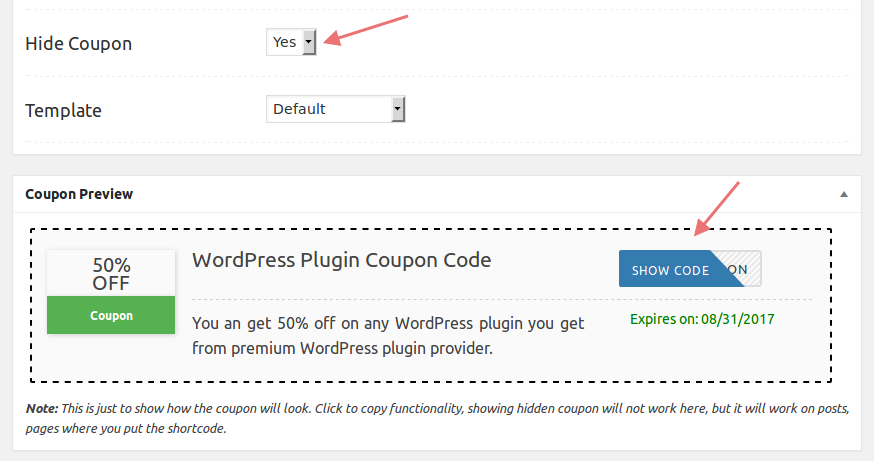
Do not use hidden codes to make the offer misleading. The visitor should still see the merchant, discount and material restrictions before clicking. The reveal should hide the code, not the terms.
Pro templates change how the offer is presented without requiring a custom design for every coupon. Use a small number of consistent templates across the site so visitors learn where the code, deal button, expiry and merchant information appear.

Expiration countdowns are useful for genuinely time-limited offers. They are less useful when the merchant regularly renews the same code and the timer simply resets. Only show urgency that reflects a real deadline.


CSV import is valuable when moving a coupon catalog from another system or onboarding many offers at once. Start with a small file, confirm the field mapping, and inspect the imported coupon pages before processing the full dataset.

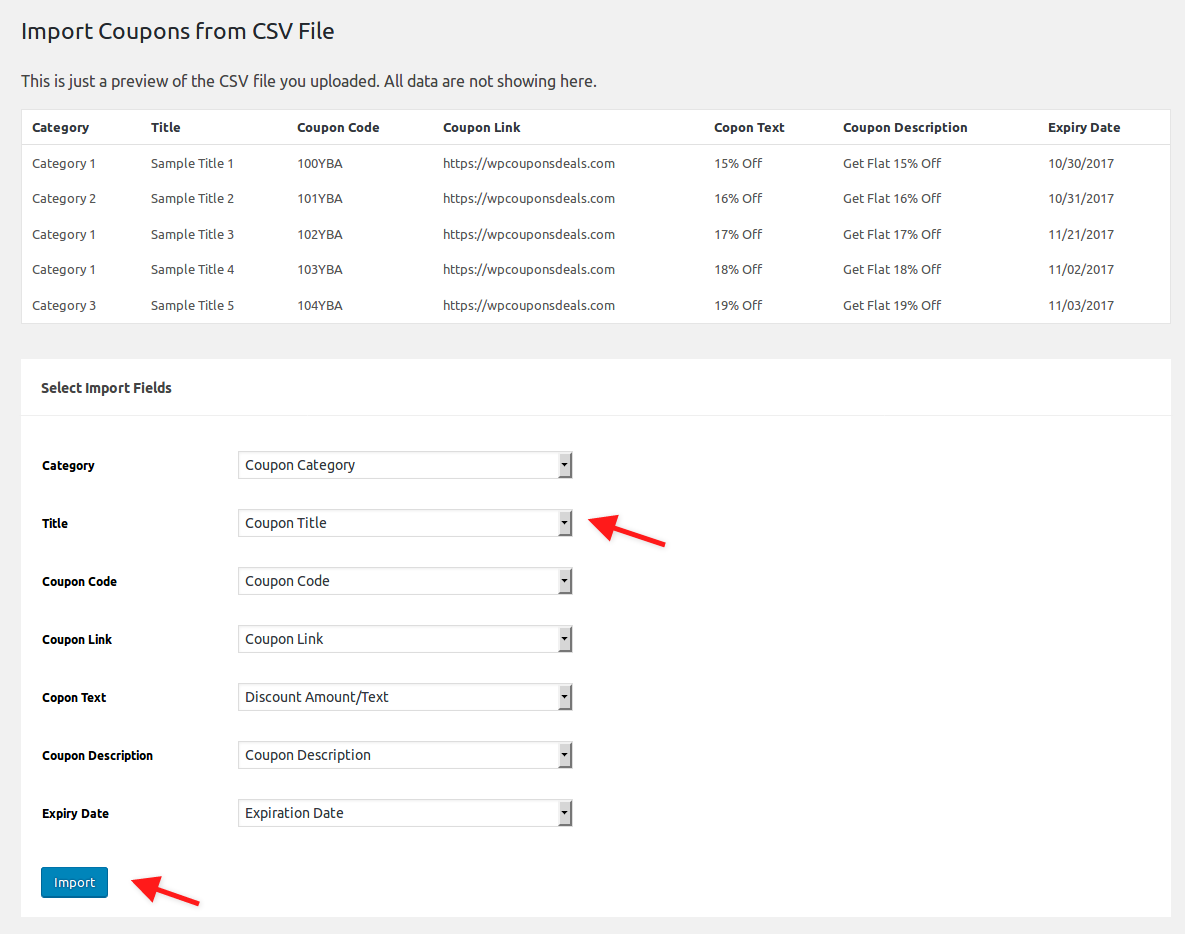
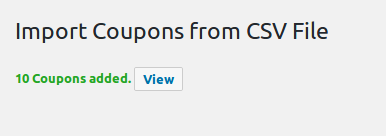
Normalize merchant names, category labels, URL formats and expiration dates before import. Bulk tools save entry time, but they also multiply mistakes when a source column is mapped incorrectly.
A coupon plugin does not automatically make a coupon site authoritative. Thin pages containing only a code and button are easy to duplicate and offer little reason to rank. Add merchant context, terms, how the offer was checked, relevant alternatives and useful buying information on pages that target organic search.
Operationally, expired coupons are the biggest maintenance issue. Assign a review cadence for high-traffic merchants, remove or clearly mark dead offers, and keep affiliate destination links current. A polished coupon card with an expired code can damage trust faster than a plain text link.
A coupon site lives or dies on freshness. Create a simple review process for the merchants that generate the most traffic: check the code, destination URL, expiration date, eligible products and any minimum spend. When a coupon stops working, either replace it quickly or mark it expired instead of leaving a high-ranking page promising a discount visitors cannot receive.
For recurring merchant offers, keep notes on what actually changed. A merchant may reuse the same coupon name while changing the percentage, product scope or end date. Updating only the visible code can leave the surrounding article inaccurate. Treat the coupon record, description and supporting editorial copy as one unit during review.
Coupon cards compete for attention with article text, ads and merchant branding, so consistency matters more than adding a different style to every offer. Pick a small set of templates and keep the code, discount, merchant name, expiry and action in predictable positions. Visitors should be able to scan several deals without relearning the card each time.
Mobile QA is especially important because click-to-copy and merchant buttons often sit close together. Test whether the code can be copied without accidentally opening the merchant, whether long codes wrap cleanly, and whether countdowns or badges make the card wider than the content column. A conversion feature is not useful if it creates a cramped tap target on the device where most affiliate traffic arrives.
Pricing checked October 16, 2026. The free plugin is available at no charge. The official pricing page currently shows promotional Pro pricing of $19 per year for one site, $39 per year for unlimited sites and $99 one time for the unlimited-sites lifetime license. The page also shows higher regular prices, so evaluate the renewal or checkout terms rather than assuming the sale price is permanent.
The current WP Coupons and Deals version reviewed here is 3.2.8. Because affiliate pages can be high-traffic landing pages, stage template or display changes before changing the coupon presentation site-wide.
WP Coupons and Deals is a focused plugin for sites where coupons are real content objects rather than occasional text snippets. Free handles the essential publishing flow well. Pro is inexpensive compared with many affiliate tools and is worth considering when hidden codes, countdowns, archives, templates or frontend submissions affect conversion or catalog management. The main limitation is not the plugin itself: coupon sites still need strong expiry management and useful editorial context to avoid becoming a collection of stale offer cards.
Yes. The free plugin can publish coupons and deals with affiliate links, click-to-copy codes, expiration dates, categories, voting, sharing, widgets, Gutenberg blocks and shortcodes.
Pro adds features such as hidden coupon codes, expiration countdowns, additional templates, more display controls, a coupon archive and frontend coupon submission.
Pricing checked October 16, 2026. The official pricing page currently shows a $19 yearly single-site plan, a $39 yearly unlimited-sites plan and a $99 unlimited-sites lifetime plan as promotional prices.
The current plugin version reviewed here is 3.2.8.
Yes, but the hide-coupon workflow is a Pro feature. It is useful when you want the click action to reveal the code and send the visitor to the merchant.
Yes. The plugin knowledge base documents CSV import with file selection, field mapping and import processing, which is useful when migrating or loading a larger coupon catalog.
No. It is mainly a coupon and deal publishing plugin. It can send visitors through affiliate links, but it does not replace a full affiliate-program system such as AffiliateWP for recruiting and paying affiliates.
Extends Gutenberg with content-focused blocks for tables of contents, reviews, schema, tabs, accordions, calls to action, timelines, coupons, and richer…
Create WooCommerce percentage, bulk, quantity and order-total discounts with product and cart conditions, then expand to advanced offers in Pro.
Run an affiliate program inside WordPress with referral tracking, commissions, affiliate dashboards, integrations, reporting, and payout workflows.
Log in or create an account to continue.