



A donation plugin should make giving simple while keeping donor information, receipts, recurring gifts, and campaign reporting manageable for the organization. I would not choose based only on the form design. Payment fees, platform fees, recurring-donation support, and donor data are just as important.
I compared one-time and recurring donations, donor management, campaign pages, payment gateways, receipts, fee structure, peer-to-peer options, reporting, current maintenance, and how much of the donor experience stays on your own site. If you only need a general payment form, see our WordPress form builder roundup.
TL;DR
- GiveWP: best overall for full-featured nonprofit fundraising.
- Charitable: best for flexible campaign-based fundraising.
- Paymattic: best when donations are one of several payment-form use cases.
- Donorbox: best for organizations that prefer a hosted fundraising platform embedded in WordPress.
- Donation Platform for WooCommerce: best for sites already built around WooCommerce.
Quick Comparison
| Plugin | Best for | Pricing model |
|---|---|---|
| GiveWP | Full nonprofit fundraising | Free core + paid plans |
| Charitable | Fundraising campaigns | Free core + paid plans |
| Paymattic | Donations + payment forms | Free core + Pro |
| Donorbox | Hosted fundraising | Hosted service + fees/plans |
| Donation Platform for WooCommerce | WooCommerce-based giving | Free plugin + Woo extensions |
How I Chose These Donation Plugins
I looked for tools designed around fundraising rather than generic checkout. That means suggested amounts, recurring gifts, donor records, receipts, campaign progress, payment gateway choice, and a clear fee model. I also considered how easy it is to export or own donor data if the organization changes tools later.
What to Check Before Choosing a Donation Plugin
The real cost of a donation system is not just the plugin license. Compare payment-processor fees, platform fees, recurring-donation requirements, gateway add-ons, and how easily donor records can be exported if you change systems later.
- Recurring giving: Verify which gateways support subscriptions and whether that feature needs a paid plan.
- Donor management: Look for receipts, donor history, campaign reporting, exports, and GDPR-friendly data controls.
- Fundraising model: Dedicated nonprofit tools usually offer stronger campaigns than general payment forms.
- Checkout friction: Test mobile donation flow, suggested amounts, payment methods, and whether donors can cover fees.
1. GiveWP – Best Overall
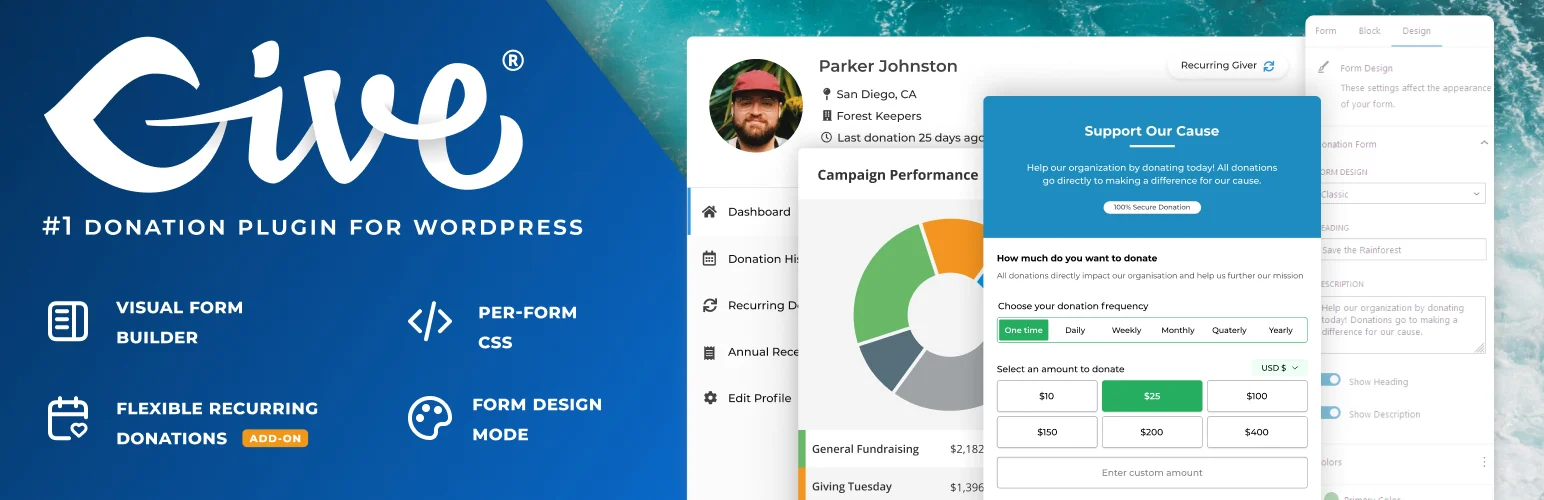
GiveWP is the most established dedicated donation platform in the WordPress plugin directory. It provides donation forms, donor records, fundraising reports, campaign features, and an add-on ecosystem for recurring gifts and additional gateways.
I would start with GiveWP when fundraising is a major part of the site and the organization expects to grow into recurring donations, donor reporting, multiple campaigns, or more advanced nonprofit workflows.
Key features
- Donation forms
- Donor database
- Fundraising reports
- Campaign goals
- Payment gateway integrations
- Add-ons for recurring donations and advanced fundraising
Pros: Mature nonprofit-focused ecosystem, large user base, and strong donor-management features.
Cons: Advanced fundraising features and gateway options can require paid plans or add-ons.
Pricing: Free core plugin; paid plans and add-ons available.
2. Charitable – Best for Campaign-Based Fundraising

Charitable is built around fundraising campaigns, donor management, donation forms, and payment integrations. It is a strong fit for nonprofits that want campaign pages and goals to be central to the giving experience.
Charitable is also a good option when you want fundraising to stay inside WordPress rather than sending donors through a separate hosted platform.
Key features
- Fundraising campaigns
- Donation forms
- Donor management
- Campaign goals
- Payment integrations
- Recurring and peer-to-peer features in paid plans
Pros: Clean fundraising model and strong campaign focus.
Cons: Some of the most useful nonprofit features are reserved for paid tiers.
Pricing: Free core plugin with paid plans.
3. Paymattic – Best for Donations Plus General Payments
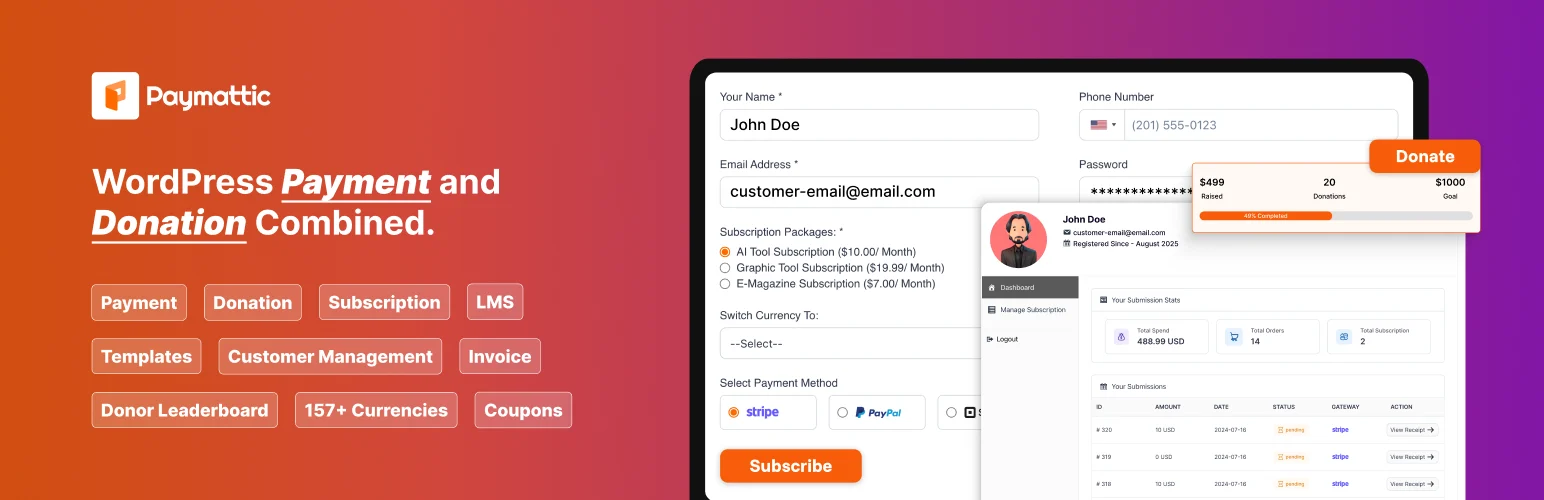
Paymattic combines donation forms with general payment collection. It is useful for nonprofits that also need event payments, memberships, simple product payments, or other transactional forms.
I would choose it when donation functionality is important but the site also needs a flexible payment-form builder rather than a nonprofit-only platform.
Key features
- Donation forms
- Stripe and PayPal support
- Recurring payments
- Payment form builder
- Donation reporting
- Integrations and automation
Pros: Good value if the organization needs both donations and broader payment forms.
Cons: It is less donation-specialized than GiveWP or Charitable for complex fundraising programs.
Pricing: Free core plugin with Pro features.
4. Donorbox – Best Hosted Fundraising Platform
Donorbox is a hosted fundraising platform that can be embedded into WordPress. It handles donation forms, recurring giving, donor management, campaigns, and fundraising tools outside the WordPress database.
This is attractive when the organization prefers a dedicated fundraising service and does not want WordPress to carry the full operational burden. The trade-off is platform dependence and another fee structure to evaluate.
Key features
- Hosted donation forms
- Recurring donations
- Donor management
- Campaign pages
- Multiple payment options
- Embeddable WordPress widgets and forms
Pros: Fast setup and a broader hosted fundraising platform with less WordPress maintenance.
Cons: Platform and transaction fees can matter, and donor workflows depend on an external service.
Pricing: Hosted service with free-to-start and paid/fee-based plans.
5. Donation Platform for WooCommerce – Best for WooCommerce Sites
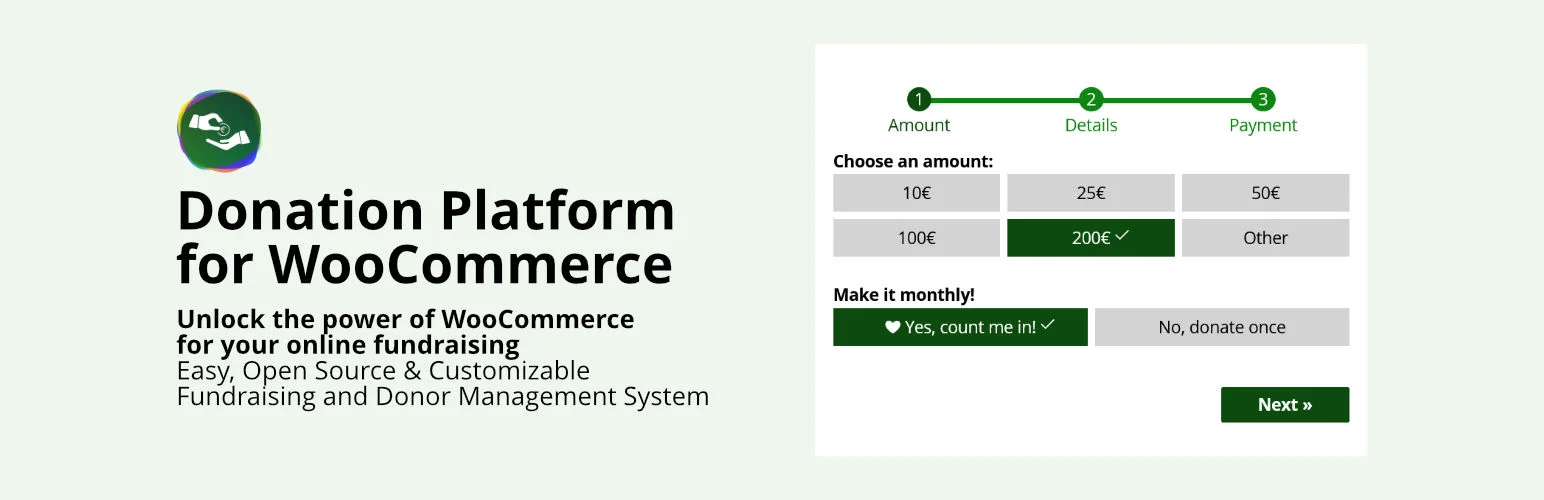
Donation Platform for WooCommerce turns WooCommerce into a donation workflow. It is useful when the site already depends on WooCommerce gateways, orders, and extensions and you want donations to use the same infrastructure.
Key features
- WooCommerce-based donations
- Custom donation amounts
- Campaign pages
- WooCommerce gateway compatibility
- Order and donor records
- Recurring donations through compatible extensions
Pros: Reuses the WooCommerce payment ecosystem and store infrastructure.
Cons: WooCommerce is heavier than a dedicated donation plugin if donations are the only transaction type.
Pricing: Free plugin; some advanced capabilities depend on WooCommerce extensions.
Which WordPress Donation Plugin Should You Choose?
GiveWP is the strongest all-round nonprofit fundraising choice, while Charitable is an excellent campaign-focused alternative. Paymattic works well when donations are one of several payment use cases, Donorbox suits organizations that prefer a hosted fundraising platform, and Donation Platform for WooCommerce makes sense when WooCommerce is already central to the site.
Conclusion
Before choosing, calculate the real cost of payment processing, platform fees, recurring-donation features, and donor-management upgrades. A donation form may be easy to add; changing fundraising systems after building a large donor database is not.
Frequently Asked Questions
What is the best WordPress donation plugin?
GiveWP is the most complete general-purpose choice for nonprofits. Charitable is a strong alternative for campaign-focused fundraising.
Can WordPress accept recurring donations?
Yes. Several donation plugins support recurring giving, but it may require a paid plan or compatible subscription/payment gateway.
Do free donation plugins charge platform fees?
Some do and some do not. Always check both the plugin’s platform fee and the payment processor fee before choosing.
Can I use WooCommerce for donations?
Yes. A WooCommerce donation plugin can work well when the organization already uses WooCommerce and wants to reuse its gateways and order system.
What payment gateways should a donation plugin support?
Stripe and PayPal are the most common starting points. Also consider local methods, recurring support, and whether donors can cover processing fees.

