


A WooCommerce referral program needs more than a coupon. It should identify the advocate, track a genuinely new customer, delay rewards until the order is valid and prevent obvious self-referrals. This list focuses on customer-to-customer referral acquisition rather than general affiliate management.
TL;DR
WPGens Refer A Friend is the simple coupon-driven option. AutomateWoo Refer A Friend is stronger for stores already using AutomateWoo. Coupon Referral Program is a dedicated WooCommerce referral workflow, WPLoyalty combines referrals with loyalty points, and Coupon Affiliates is the strongest current replacement when coupon-based referral and affiliate tracking overlap.
Quick Comparison
| Plugin | Best for | Current signal |
|---|---|---|
| Refer A Friend by WPGens | Simple customer referrals | 1K+ installs |
| AutomateWoo Refer A Friend | AutomateWoo stores | 2K+ Marketplace installs |
| Coupon Referral Program | Dedicated coupon referral workflows | Active commercial product |
| WPLoyalty | Referrals plus loyalty points | 3K+ installs |
| Coupon Affiliates | Coupon referral/affiliate tracking | 5K+ installs |
How I Chose These Plugins
I looked for actual customer-to-customer referral mechanics: unique links or codes, advocate and friend rewards, order-status validation, anti-abuse controls, reporting, and WooCommerce-native reward handling. I excluded affiliate-manager plugins whose main purpose is recruiting commission-based partners and avoided general loyalty tools unless referral acquisition is a clear feature.
1. Refer A Friend for WooCommerce by WPGens — Best for Straightforward coupon-based customer referrals

Best for: Straightforward coupon-based customer referrals
WPGens keeps the core referral loop easy to explain. Each member gets a referral link, a referred purchase can trigger a coupon reward after the order completes, and the Premium version expands friend rewards, product-specific rules and statistics. The plugin also received a public review in May 2026, which is a useful maintenance signal.
Key Features
- Unique referral link for each member
- Coupon rewards for successful advocates
- Reward issuance after completed orders
- WooCommerce coupon controls for value and minimum order
- Premium friend coupons and product-level referral sharing
- Premium referral statistics for customers and admins
Pros
- Easy reward model for customers to understand
- Uses familiar WooCommerce coupons rather than a separate commission system
Cons
- Advanced reporting and friend rewards require Premium
- Coupon rewards are less flexible than cash or wallet payouts for some stores
Pricing: Free version on WordPress.org; Premium adds more reward, sharing and reporting controls.
Official WordPress.org listing.
2. AutomateWoo – Refer A Friend — Best for AutomateWoo stores

AutomateWoo Refer A Friend is a current WooCommerce Marketplace add-on with roughly 2,000 active installs. It supports link-based and coupon-based campaigns, advocate rewards, approval controls and fraud checks. It is most logical when AutomateWoo already runs the store’s lifecycle marketing.
Official WooCommerce Marketplace page.
3. Coupon Referral Program by WP Swings — Best for Stores wanting a dedicated referral dashboard and upgrade path
Best for: Stores wanting a dedicated referral dashboard and upgrade path
WP Swings builds the program around referral coupons and rewards rather than affiliate commissions. The Pro product supports customer and admin referral workflows, and the vendor lists current WooCommerce compatibility and paid plans for one, five or ten sites.
Key Features
- Unique coupon referral programs
- Customer referral links and codes
- Rewards tied to successful referrals
- Referral reminders and sharing tools
- Admin referral reporting
- Pro controls for expanded campaigns and communication
Pros
- Purpose-built around WooCommerce referral coupons
- Paid plan is accessible for a single store
Cons
- Some useful campaign controls sit in Pro
- Store owners still need to design fraud and refund rules carefully
Pricing: Free version available; Pro starts at $49/year for one site when checked.
Official WP Swings documentation.
4. WPLoyalty — Best for Combining refer-a-friend acquisition with points and rewards
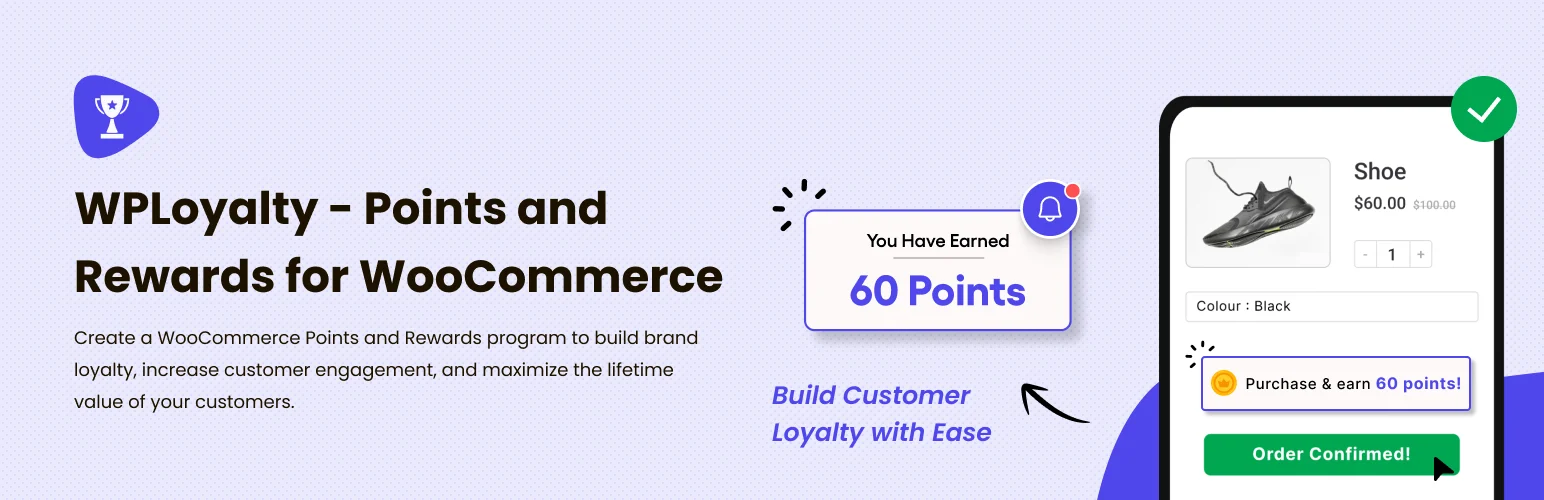
Best for: Combining refer-a-friend acquisition with points and rewards
WPLoyalty is broader than a dedicated referral plugin, but referrals are a first-class part of the product. It can generate a unique referral link for each referrer and reward both the referrer and referee after a successful sale. It belongs here only if you also want loyalty mechanics; otherwise a narrower referral plugin is cleaner.
Key Features
- Unique referral links
- Rewards for both advocate and referred customer
- Points or instant reward options
- Automatic enrollment of existing customers as referrers
- Email notifications for referral rewards
- Broader loyalty rewards such as coupons and free shipping
Pros
- One system can handle referrals plus loyalty
- Flexible reward types beyond a single coupon format
Cons
- Broader scope than stores needing referrals only
- Can overlap with an existing points or loyalty plugin
Pricing: Free plugin with commercial upgrades.
Official WordPress.org listing.
5. Coupon Affiliates — Best for coupon-based referral and affiliate tracking
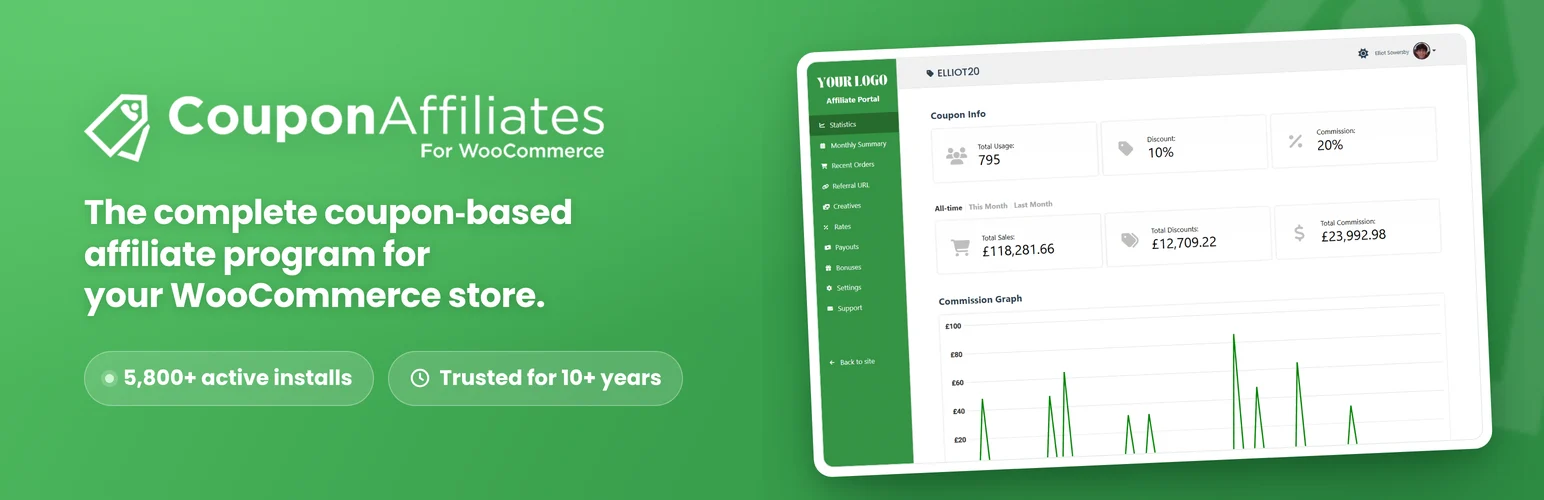
Coupon Affiliates has about 5,000 active installs and a current 2026 release. It is broader than a pure refer-a-friend plugin, but it is much more established than the previous ~10-install option and works well when customers or partners are attributed through coupon codes.
Best for: stores where coupon attribution, commission-style reporting and referral tracking overlap.
Official WordPress.org listing.
How to Choose the Right Plugin
Use WPGens when you want a simple referral link plus coupon reward with minimal setup. Use AutomateWoo Refer A Friend if AutomateWoo already controls your post-purchase marketing.
Choose WPLoyalty only when referrals are part of a wider points-and-rewards strategy. That keeps this article separate from our existing loyalty roundup: the deciding factor here is whether referrals are the acquisition mechanism, not whether customers can earn points for purchases.
Before launch, test self-referrals, guest checkout, refunds, order cancellations, coupon stacking and repeat referrals. Those edge cases matter more than the referral landing-page design.
Related reading on PluginSuggest: WooCommerce loyalty, points and rewards plugins, WordPress affiliate management plugins.
Design the Referral Economics Before the Plugin
The reward should be profitable before it is attractive. Work backwards from average order value, gross margin, repeat-purchase rate and the percentage of referred orders you expect to refund. A $20 advocate reward may be sustainable for a high-margin subscription order but destructive for a low-margin physical product. Set a minimum order value or qualifying product rule when the economics require it.
Two-sided programs often convert better because the friend has an immediate reason to buy, but they also increase acquisition cost. If both people receive $10, treat the program as a $20 acquisition cost before payment fees and support time. The plugin can issue the reward; it cannot decide whether the reward makes business sense.
Fraud and Attribution Tests
Test self-referral attempts with the same email, billing address, device and payment method. Also test guest checkout, coupon sharing in private messages, expired links, a refund during the reward hold period and a second order from the same referred customer. A referral plugin should make the valid event unambiguous: usually the first completed order from a genuinely new customer.
Cookie-only attribution can fail when links move between devices or private apps. Code-based systems are useful because the customer can carry the referral through WhatsApp or another channel, but codes are also easier to publish publicly. Decide whether a coupon should work for anyone who sees it or only for the intended new customer.
Measure Referral Quality, Not Just Orders
Track referred revenue, refund rate, new-customer rate and repeat purchase after the first referred order. A program that generates many discounted orders from existing customers is not doing the same job as one that brings genuinely new buyers. The referral dashboard should support business decisions, not simply show a large number of clicks.
Referral Program Launch Checklist
Start with a quiet pilot instead of emailing every customer on day one. Place a referral link in My Account, invite a small group of repeat buyers, and watch support questions for a week. That gives you a chance to catch unclear reward timing, coupon conflicts and fraud edge cases before the campaign reaches a larger audience.
If the program uses coupon rewards heavily, also compare the WooCommerce coupon plugins so referral rewards do not conflict with your broader promotion rules.
Conclusion
WPGens is the cleanest starting point for most WooCommerce stores that want a classic refer-a-friend program. AutomateWoo is the better operational choice when you already pay for its automation stack, while WPLoyalty makes sense when referral acquisition and loyalty rewards need to live together. Whichever plugin you choose, define the referral event and refund window before promoting the program; unclear reward rules create more support work than they create growth.
Frequently Asked Questions
What is the best WooCommerce referral plugin?
Refer A Friend for WooCommerce by WPGens is the strongest simple choice for coupon-based referrals. AutomateWoo Refer A Friend is better when your store already uses AutomateWoo.
Is a referral program the same as an affiliate program?
No. Referral programs usually turn existing customers into advocates and reward them for bringing friends. Affiliate programs are generally built for partners or publishers who promote the merchant for commissions.
Can I reward both the referrer and the friend?
Yes. Several plugins in this roundup support two-sided rewards, although the exact reward types may depend on the free or paid version.
How do I stop self-referrals?
Use plugins with approval or fraud controls, delay rewards until an order reaches a trusted status, and test rules around matching accounts, emails, payment details and refunds.
Should referral rewards be coupons or store credit?
Coupons are simpler and widely supported. Store credit can feel more valuable and keeps spend inside the store, but it adds balance-management complexity.