



A WooCommerce loyalty plugin should give customers a clear reason to come back without turning every purchase into a confusing points equation. The best programs make earning and redeeming rewards easy to understand, while giving the store enough control over expiration, referrals, customer tiers, exclusions, and profit margins.
For this roundup, I compared purchase points, non-purchase earning actions, redemption rules, referrals, birthday or campaign rewards, point expiry, customer dashboards, role and product rules, coupons, and reporting. If your retention strategy also uses discounts, see our WooCommerce coupon plugins and dynamic pricing plugins.
TL;DR
- WPLoyalty: best overall for modern points, rewards, referrals, and campaigns.
- YITH WooCommerce Points and Rewards: best for stores already using the YITH ecosystem.
- WooCommerce Points and Rewards: best official extension for straightforward earn-and-redeem points.
- SUMO Reward Points: best for stores that want a large rule set and many earning actions.
- Gratisfaction: best for loyalty programs mixed with referrals, contests, and gamification.
Quick Comparison
| Plugin | Best for | Pricing |
|---|---|---|
| WPLoyalty | Modern all-round loyalty | Free core + Pro |
| YITH Points and Rewards | YITH-powered stores | Commercial/free availability varies |
| WooCommerce Points and Rewards | Official simple points system | Premium |
| SUMO Reward Points | Advanced earning rules | Premium |
| Gratisfaction | Gamification and referrals | Free + paid hosted plans |
How I Chose These WooCommerce Loyalty Plugins
I focused on how understandable the program is for customers and how controllable it is for the store. Useful features include clear earn and redeem values, sensible expiry, caps on discounts, product or category exclusions, referral abuse protection, and a customer-facing place to see points history. A loyalty program should improve repeat purchase behavior without creating an accounting problem.
1. WPLoyalty – Best Overall
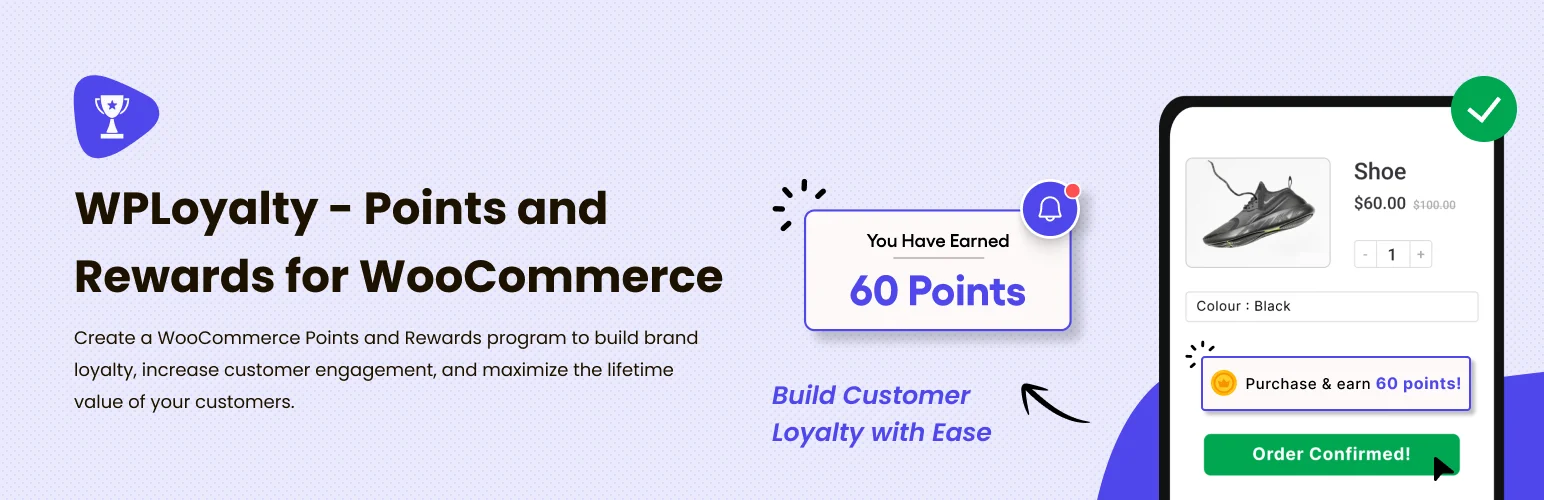
WPLoyalty combines points, rewards, referrals, campaign rules, customer-facing reward pages, and several ways to earn beyond purchases. It is built specifically around WooCommerce retention rather than treating points as a simple coupon generator.
I would start here when you want room to experiment with a real loyalty program. You can reward purchases, account actions, referrals, birthdays, or campaigns while controlling how points are redeemed and when they expire.
Key features
- Points for purchases and customer actions
- Reward and coupon rules
- Referral campaigns
- Customer reward page
- Point expiry and conditions
- Advanced campaigns and segmentation in Pro
Pros: Modern loyalty workflow and good balance between points, rewards, and referrals.
Cons: The deeper campaign and condition controls require Pro, and a highly customized rewards program still needs planning.
Pricing: Free core plugin with a Pro edition.
2. YITH WooCommerce Points and Rewards – Best for YITH Users
YITH WooCommerce Points and Rewards lets customers collect points from purchases and convert them into discounts. It supports expiry, different earning or redemption values, product and role conditions, and integrations with other YITH ecommerce tools.
I would choose it when the store already relies on YITH for wishlist, gift cards, subscriptions, or other WooCommerce features. Keeping loyalty inside the same vendor ecosystem can simplify compatibility and support.
Key features
- Purchase-based points
- Point-to-discount conversion
- Customer point balances
- Point expiry
- Role and product rules
- YITH ecosystem integrations
Pros: Mature WooCommerce loyalty features and good fit with other YITH extensions.
Cons: It is less attractive if you do not use the YITH ecosystem, and current free versus premium availability can change.
Pricing: Commercial product; check the current YITH plan and free-version availability before choosing.
3. WooCommerce Points and Rewards – Best Official Extension
WooCommerce Points and Rewards is the official WooCommerce extension for rewarding purchases with points and letting customers redeem those points for discounts.
It is intentionally more straightforward than a gamified loyalty suite. That is a benefit when you only want a predictable earn-and-redeem system and prefer an extension maintained within the WooCommerce marketplace.
Key features
- Points earned from purchases
- Redeem points for discounts
- Product-level earning rules
- Customer balance history
- Maximum discount controls
- WooCommerce-native order integration
Pros: Focused, official WooCommerce extension with a simple loyalty model.
Cons: Fewer referral, gamification, and campaign options than specialist loyalty platforms.
Pricing: Premium WooCommerce extension.
4. SUMO Reward Points – Best for Advanced Earning Rules
SUMO Reward Points is a premium reward system with many ways to earn points, including purchases, account actions, referrals, reviews, and other configurable events. It also supports point expiry, levels, redemption rules, and a wide range of conditions.
I would consider SUMO when the program has complicated earning logic and you prefer a one-time commercial-plugin style over a hosted loyalty service.
Key features
- Points for purchases and actions
- Referral rewards
- Review and social rewards
- Point expiry
- Reward levels and rule conditions
- Checkout redemption controls
Pros: Large rule set and many earning scenarios.
Cons: The number of settings can make program design complicated, and you should test compatibility carefully with major checkout customizations.
Pricing: Premium plugin sold through CodeCanyon.
5. Gratisfaction – Best for Gamification and Referrals

Gratisfaction combines loyalty points with referrals, contests, giveaways, social actions, birthday rewards, and other engagement campaigns.
This makes it different from a conventional points plugin. I would use it when the marketing strategy intentionally mixes customer loyalty with referral growth and gamified campaigns rather than focusing only on purchases.
Key features
- Loyalty points
- Referral campaigns
- Contests and giveaways
- Social and engagement rewards
- Birthday campaigns
- Customer-facing loyalty widgets
Pros: Broad engagement toolkit that goes beyond purchase points.
Cons: The hosted-service model and broader marketing feature set are unnecessary for stores that only want a simple points balance.
Pricing: Free and paid hosted plans are available.
Which WooCommerce Loyalty Plugin Should You Choose?
WPLoyalty is my first choice for a flexible modern loyalty program. YITH is a good fit for stores already using its ecosystem, the official WooCommerce extension keeps points simple, SUMO provides deeper earning rules, and Gratisfaction is strongest when referrals and gamification are part of the strategy.
Conclusion
Keep your loyalty math simple enough that customers can understand the value without a calculator. Set sensible redemption caps and expiry rules, then measure whether members actually buy more often rather than judging success by the number of points issued.
Frequently Asked Questions
What is the best WooCommerce loyalty plugin?
WPLoyalty is my strongest all-round choice because it combines points, rewards, referrals, and campaign controls in one system.
Are loyalty points different from coupons?
Yes. Coupons are usually issued as individual discounts, while a loyalty system tracks a customer balance and lets them earn rewards over time.
Can customers redeem points at WooCommerce checkout?
Most points plugins can let eligible customers convert points into a checkout discount, subject to limits you configure.
Should WooCommerce reward points expire?
Expiry can encourage customers to return, but overly aggressive expiry can make a program feel unfair. Make the rule clear before customers earn the points.
Can WooCommerce loyalty plugins reward referrals?
Yes. WPLoyalty, SUMO Reward Points, and Gratisfaction are examples with referral-related reward workflows.

